

Fence heights and layout, sport by sport
Athletic fencing is dimensioned by the ball, not by the property. A baseball backstop runs tall behind the plate and steps down along the foul lines, an outfield line is short because it is a boundary rather than a barrier, and a tennis or pickleball court is a full enclosure because the ball has to stay in play.
| Application | Typical height | Notes |
|---|---|---|
| Baseball / softball backstop | Commonly 16–24 ft at the plate, sometimes taller with netting above | Height set by spectator location behind the plate and available run-back distance |
| Foul-line transition wings | Steps down from backstop height to 6–10 ft along the lines | Stepped or raked transition; the step points are where framework is heaviest |
| Outfield boundary | 4–8 ft, often with a top rail or safety cap | Defines the home-run line and keeps balls out of adjacent property |
| Tennis | 10 ft full enclosure typical, 8 ft on some park courts | Windscreen commonly added; gate placement out of the line of play |
| Pickleball | Commonly 8–10 ft enclosure, often with dividers between courts | Court dividers keep balls out of neighboring games — the main complaint on multi-court builds |
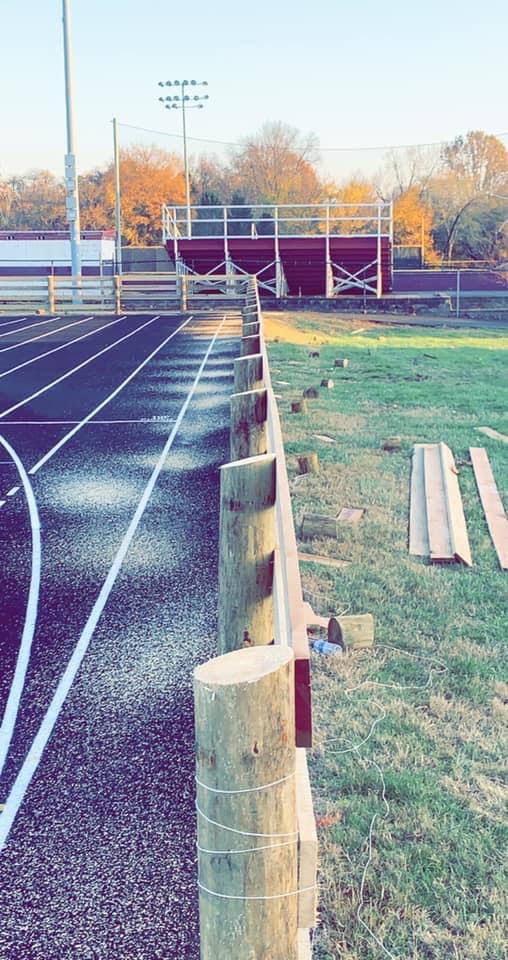
| Track and field | 4–6 ft perimeter with controlled gates | Access control for community use; wide gates for maintenance equipment |
| Soccer, football, multi-use | 4–6 ft perimeter, taller ball containment behind goals | Containment concentrated where the ball actually leaves the field |
| Batting cages / bullpens | Framed enclosure with netting or fabric | Netting on an engineered frame rather than fence fabric overhead |
Governing-body and league specifications vary and frequently override general practice, so we build to the dimensions the athletic director, league or design drawings specify.